

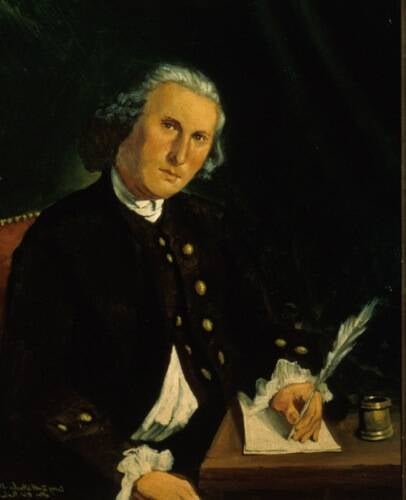
When Maryland delegates arrived in Philadelphia at the Second Continental Congress, they were initially restrained by conservative instructions from the Maryland Convention, which prohibited them from supporting independence. Few men worked harder to change that reality than Samuel Chase. A lawyer from Annapolis known for his uncompromising patriotism, Chase spent months arguing that reconciliation with Great Britain was no longer possible after the escalation of military conflict and the Crown's rejection of colonial petitions.
Returning to Maryland in June 1776, Chase joined fellow Patriot Charles Carroll of Carrollton in persuading the Maryland Convention to reverse its position. On June 28, the Convention adopted new instructions authorizing Maryland's delegates to vote for independence, an essential political shift that ensured the colony would stand with the emerging United States. Just days later, on July 2, 1776, Maryland joined the unanimous vote in favor of independence.
Chase subsequently signed the Declaration of Independence, but his most valuable contribution came before the document was officially adopted. His relentless lobbying in both Maryland and Philadelphia helped to sway one of the more cautious colonies into support for separation from Britain.
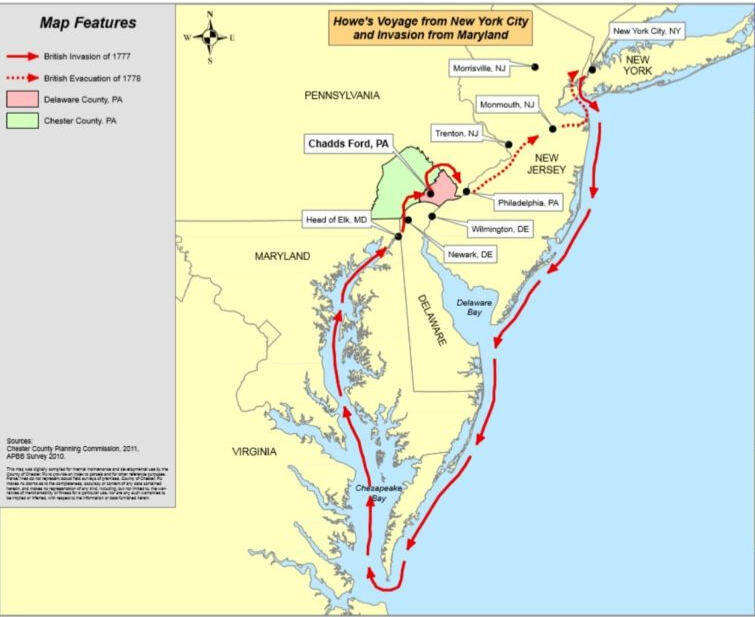
On August 25, 1777, Lieutenant General William Howe landed nearly 15,000 British and Hessian troops at Head of Elk (modern Elkton, Maryland), beginning the Philadelphia Campaign. His decision to approach Philadelphia through the Chesapeake Bay bypassed the Patriot defenses on the Delaware River but delayed the campaign by several weeks, giving George Washington valuable time to prepare.
After securing the landing, Howe's army marched north through Cecil County, foraging for livestock, grain, and wagons from Maryland farms while crossing the Elk River watershed toward Pennsylvania.
Less than three weeks after leaving Maryland, Howe defeated Washington at the Battle of Brandywine on September 11, opening the road to Philadelphia. Although often overlooked, Howe's brief march across Maryland marked the opening phase of one of the Revolution's most significant campaigns and brought the war directly to Maryland's communities.
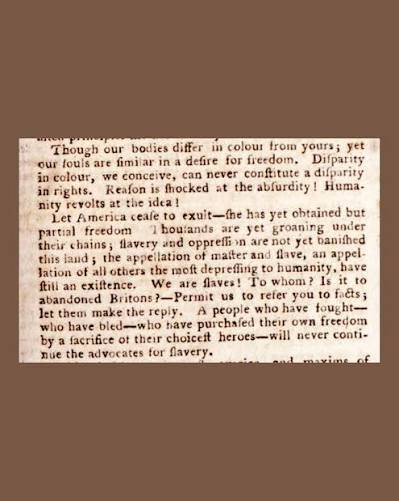
Vox Africanorum was an anonymous antislavery essay published in the Maryland Gazette in Annapolis, Maryland, in May 1783, just as the Revolutionary War was ending.
The essay was written under a Latin pseudonym meaning "Voice of the Africans." The publication appealed directly to the ideals of the American Revolution, stating, "Liberty is our claim. Reverence for our Great Creator, principles of humanity, and the dictates of common sense, all convince us that we have an indubitable right to liberty."
The author also highlighted the contradiction between Americans' fight for freedom from British rule and the continued enslavement of Black people. The author stated that,
"When Great Britain essayed to make her first unjust and wicked attempts to forge chains to enslave America... America then... proclaimed, 'We Will be Free'. Though our bodies differ in color from yours; yet our souls are similar in a desire for freedom. Disparity in color, we conceive, can never constitute a disparity in rights."
Although the identity of the author remains unknown, the essay stands as one of the earliest public anti-slavery arguments in Maryland and the Upper South, illustrating how revolutionary speech inspired early challenges to slavery even though the institution persisted in Maryland for decades afterward.
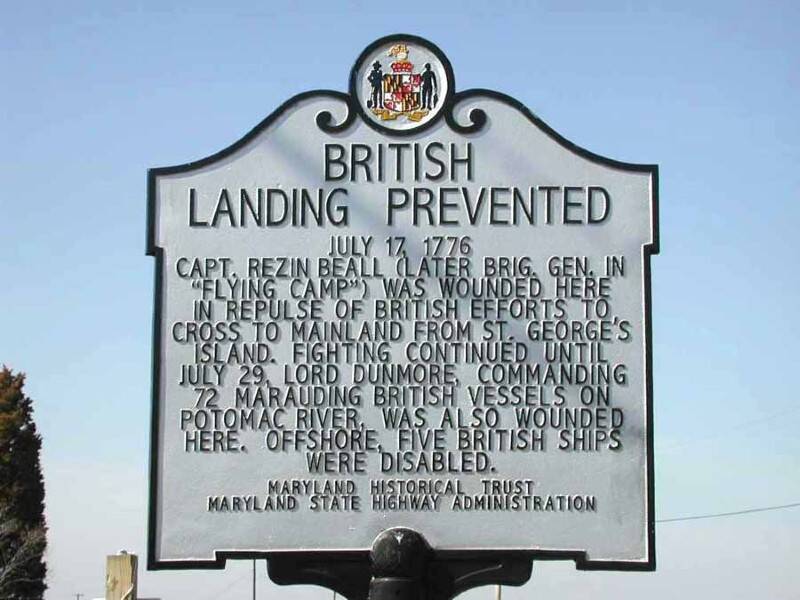
Maryland's largest engagement of the Revolutionary War took place starting July 17, 1776, on Saint George's Island in Saint Mary's County (Western Shore). The confrontation ended in an American victory.
After being driven out of Virginia, displaced Royal Governor John Murray, 4th Earl of Dunmore, relocated his fleet of around 70 British naval vessels further north on the Potomac River. Dunmore was in command of Regulars and Loyalist provincials. Most notably, Freedom Seekers who fled their Patriot masters to aid the British after Dunmore's Proclamation. With smallpox and supply shortages plaguing Dunmore's force, he sought to establish a new base on St. George's Island to launch raids from and acquire fresh provisions.
Learning of the British presence, the Maryland Council of Safety dispatched Patriot militia commanded by Rezin Beall to confront Dunmore's forces. On July 17, 80-100 British soldiers attempted to land on the island. Protected by dense foliage, Beall's men waited for the British to get close before beginning a series of skirmishes that caught the approaching British off guard. Accurate fire from the Patriot militia forced the British to withdraw. Beall was wounded during the fight but survived his injuries. His militia managed to prevent the initial British landing on the island.
Fighting on the island continued until July 29. Maryland sent a combined force of 700 militiamen to the island along with artillery and naval support. Facing overwhelming local militia numbers, lack of provisions and reinforcements, Dunmore decided to cease offensive operations and leave St. George's Island. Though the initial July 17 engagement gets the most notoriety, the Battle of St. George's Island was really a series of engagements and tactical maneuvering that unfolded throughout late July, 1776.

Add comment
Comments